21 Reasons to Visit Normandy
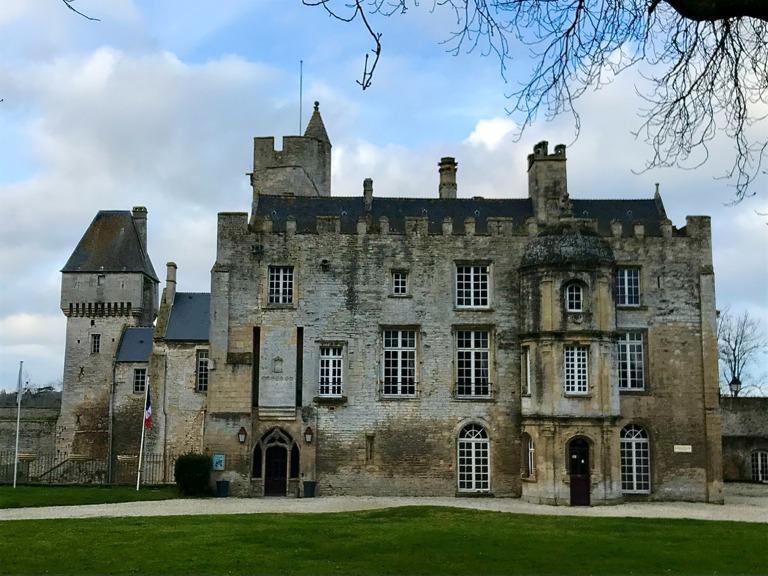
Normandy should be on your bucket list as it's family friendly and appeals to history buffs, foodies and nature lovers. Here are some of the best reasons to visit Normandy.
1. Explore the Coastline
An ever-changing landscape of golden beaches, dunes, fantastic views, sunset and sunrise viewing points set against the rhythm of the high and low tides. You’ll have a different experience depending on which part of the Normandy coastline you visit.
2. Attend the Annual D-Day Commemorations
D-Day is commemorated every year in Normandy with ceremonies, dances, parades, firework displays, re-enactments and a lot more. The D-Day Festival lasts for a couple of weeks and starts in late May to early June. A programme is published every year and gives many visitors the opportunity to be involved with a wide variety of activities to commemorate this significant historic events.
3. Visit Caen
Caen is the capital of the Calvados department and a vibrant city with its mix of history, fine dining and high quality shopping. William the Conqueror made Caen his main place of residence and you can relive his influence on the city by visiting various sites. Highlights include the castle, two abbeys, endless shopping opportunities, a huge choice of eating and drinking outlets, museums, green spaces and historic buildings.


4. Celebrate Being a Foodie
One of the most enjoyable reasons to visit Normandy is tasting the many food and drink specialities. Normandy is best know for dairy products (cheese, butter, cream and caramels), apples and seafood..
The nearby coastline ensures a plentiful supply of fish, seafood and shellfish. Normandy apple orchards produce cider, Calvados (an apple brandy), pommeau, apple juice, pear juice, poiré (a sparkling drink similar to babycham). Or how about beautiful apple tarts, apple jelly, and apple pastries made from this very versatile food.
5. Discover an Abbey
An abbey is defined as a monastery or convent, which is either composed of monks or nuns who have withdrawn from society to live a life of poverty and chastity. An abbot or an abbess would be in charge. The cloister is usually at the centre of the building with all other rooms and buildings able to be accessed from it. Some of the most notable ones include Mont Saint-Michel, Abbaye aux Dames and Abbaye aux Hommes in Caen, Abbaye de Jumièges near Rouen, Abbaye de Saint-Wandrille in the Seine Valley, Abbaye de Saint-Vigor, Cerisy-la-Forêt in La Manche), Abbaye de la Lucerne in La Lucerne-d’Outremer in Manche, Abbaye de Hambye located in the Cotentin Peninsula.
6. Visit a Museum
Normandy has so many museums including ones dedicated to D-Day, fine arts, food, history, typography, lace production, copper pans, Christian Dior, cheese, cider, meteorites, whales, dinosaurs, textiles, medicine and much more besides. They’re the perfect place to visit on either a rainy day or when it’s too hot to be outside.


7. Enjoy Some Family Friendly Fun
Normandy is a very welcoming to families and has much to offer children. Younger children will enjoy wide sandy beaches with shallow waters, ancient castles, miniature railways, zoos, forests to explore, theme parks and soft play areas. Older children will enjoy kayaking, laser quest games, the D-Day museums, Cité de la Mer where you get to go on a nuclear submarine, the cliffs at Etretat, maize mazes and much more besides.
8. Explore Mont Saint-Michel
One of the most popular reasons to visit Normandy is Mont Saint-Michel which is a small village topped with an impressive abbey. The island has been a sanctuary since the 8th century although it wasn’t until 966 that the first Benedictine monks arrived and built a church and subsequently the abbey. The abbey is unusually spread over 3 levels and the views from the top are magnificent.
9. Visit a Cathedral or a Church
Many Normandy cathedrals and churches have been returned to their former glory giving an insight into their history and the restoration work. The difference between a cathedral and a church is that the former is run by a bishop. Normandy cathedrals include Rouen, Le Havre, Bayeux and Coutances. Sometimes they are known as basilicas rather than cathedrals such as those in Avranches, Lisieux and Douvres-la-Délivrande. Generally they are linked to particular saint or an important historical event.
10. Take a Walking or Cycling Holiday
Normandy has a huge network of paths making it a great location for a walking holiday. You can choose walks along the coast, through the countryside or around cities. For long treks it is crossed by numerous GR routes (Grand Randonnées). For easier flat routes many old railway lines have been made into paths.
If you’d prefer to discover Normandy’s rural landscape on two wheels there are plenty of cycling routes. If you don’t have your own bike you can rent one at numerous places throughout the region. There are 7 long distance cycle paths that cross Normandy. For a circular route or a shorter route for either cycling or walking then head to a local tourist office either in person or online. They will all have details of local circuits and you can either download or buy information sheets for each route.


11. Visit a D-Day Site (and not only in June)
Although many visitors come to Normandy to visit the D-Day sites in June for the anniversary on 6th June there is still plenty to see during the rest of the year. The fortnight of the D-Day Festival is often busy so visiting when it’s quieter is a good option. Some D-Day museums do close during January but a few are open. The memorials, monuments, the five D-Day beaches and cemeteries are open all year.
12. Visit a Château
A castle is usually defined as a large building from the medieval period, fortified against attack with thick walls, battlements, towers and sometimes a moat. A second meaning is a magnificent and imposing old mansion. The same is true in French but there is also a third definition meaning that a château was where a king or a lord lived. This explains why we see quite different styles of châteaux and why manor houses (manoirs) are also included in this category. A fortified castle is known as a château fort while a stately home/mansion can also be known as a manoir or a hôtel.
Some of the more well known and impressive Normandy châteaux in Calvados include: Falaise, Caen, Fontaine-Henry, Creully and Balleroy.
In Manche there is Gratot near Coutances, Hôtel de Beaumont in Valognes, Pirou and Saint-Sauveur-le-Vicomte. Domfront and Carrouges castles are in the Orne department. And finally Upper Normandy castles include the châteaux Gaillon, Beaumesnil, Dieppe and Taillis.
13. Discover parks/gardens/flowers
An annual competition held throughout France called ‘villes et villages fleuris’ aims to improve the quality of residents’ lives and maintain green spaces. They include Caen in Calvados which has a landscaped park called La Collins Aux Oiseux, a botanical park and a public garden. Evreux, Dieppe, Domfront, Domfront and Bagnoles de l’Orne show the diversity of the towns meeting the award criteria. Coutances in La Manche has a themed mosaiculture public garden and an annual dahlia festival. As well as these towns and villages, elsewhere in Normandy you can find botanical gardens, landscaped parks and public gardens called a jardin public or jardin des plantes.
14. Marvel at the Bayeux Tapestry
The Bayeux Tapestry is an embroidered cloth measuring nearly 70 metres long and depicts the events leading up to the Norman conquest of England. The conquest culminated in the Battle of Hastings in 1066. The tapestry is thought to date from the 11th century and was originally hung in Bayeux Cathedral. As of September 2025, Bayeux Tapestry Museum closed for a major renovation project. The tapestry is currently on display in London while the Bayeux museum is being prepared to welcome it back in autumn 2027. The 58 scenes are embroidered on linen with coloured woollen yarns and Latin descriptions. Each scene is made up of nine linen panels sewn together after each was embroidered and the joins were disguised with subsequent embroidery.
15. Visit a Food Festival
Normandy has some of the best food festivals in France which celebrate the wonderful food produced in this region. Festivals focus on apples and cider, cheese, seafood, mushrooms, andouille, boudin noir (black pudding) and caramel.


16. Go To a Summer Event
As well as food festivals there is a whole range of events planned every summer.Here are some examples to whet your appetite:
- Festival of the Sea - Courseulles-sur-Mer
- Papillons de Nuit music festival - between Villedieu and Saint Hilaire du Harcouët
- Jazz sous les Pommiers Jazz Festival - Coutances
- Festival Grand Marées music festival - Jullouville
- Beauregard Music Festival near Caen
- Classical Music Festivals
- Various medieval festivals
- Cidre et Dragon - steampunk/medieval
There are also local festivals and summer events advertised by the nearby tourist offices.
17. Travel To One of Les Plus Beaux Villages
All across France you will find villages designated as "les plus beaux villages"i.e. the most beautiful villages. Normandy has 7: Barfleur, Beuvron-en-Auge, Saint-Céneri-Le-Gérei, Le Bec-Hellouin, Lyons-la-Forêt and Veules-les-Roses. They are all very different and have been chosen for their charm and individuality.
18. Take a Day Trip from Normandy
Widen your horizons by exploring a little further afield by taking a day trip or even an overnight stay. How about St Malo, Dinan, Rennes or Dinard in Brittany? Fougères in Ille-et-Vilaine is peppered with historic buildings whereas Le Mans in Pays de la Loire is known for its car race. You can also take a day trip to Paris by train if you fancy a very different experience. For an overnight stay, a trip to the Palace of Versailles near Versailles is unforgettable. There are plenty of options if you’d like to go exploring just beyond the Normandy borders.
19. Discover Nature and the Countryside
Normandy is a largely agricultural region but due to the terrain it still retains very much a landscape of small fields surrounded by hedges with areas of woodland and marshland. This makes it ideal for spotting wildlife or for exploring one of the four regional parks. From large mammals such as wild boar and red deer through to stunning spring wild flowers there is always something for the wildlife enthusiast to discover.
20. Get Yourself an Adrenalin Rush
Are you one of those people who likes to get their adrenalin pumping on holiday? Do you like to scare yourself a bit or push yourself outside your comfort zone? If yes, then Normandy might have what you are looking for … Bungee jumping, giant zip wire, enormous swings, accrobranches (high wire trails through the treetops), rock climbing, kayaking, Via Ferrata (a trail along the edge of a cliff-side ie think mountain goat), theme parks with scary rides, galloping on horseback along the beach, windsurfing, yachting, kite sailing, sand sailing, paragliding ... it's all here in Normandy and waiting for you!


21. Visit Historic Rouen
Suggestions of things not to miss in Rouen are the Cathedral, old medieval buildings and narrow streets, the Gros Horlorge - a 14th century astronomical clock, Rouen Castle, its museums including those celebrating Joan of Arc (who was burned at the stake in Rouen), natural history, fine art, ceramics and Rouen through the ages, the Church of Saint Joan of Arc, Saint-Ouen Abbey and the immersive Viking Museum.